Call: +91 88666 58238 | Mon-Sat, 09:30-18:30 IST

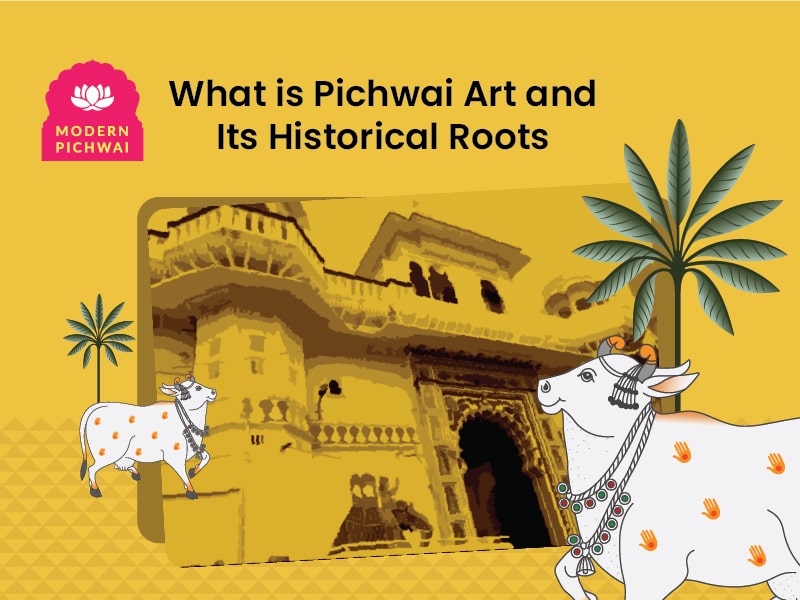
What is Pichwai Art and Its Historical Roots

Pichwai art is a traditional Indian painting style done on large pieces of cloth. Artists usually create these paintings to hang behind temple idols, especially Shrinathji, the child form of Lord Krishna. Unlike small miniature paintings, Pichwais are big, full of detail, and draw you right into the scene.
These paintings are made with natural dyes, mineral colors, and sometimes small touches of gold or silver. Moreover, they depict Krishna in beautiful detail, often surrounded by cows, lotuses, peacocks, flowers, and festive decorations. The size, care, and meaning behind each painting make Pichwai both a tool for devotion and a stunning piece of art.
Nathdwara and the Pushtimarg Legacy
Nathdwara, located near Udaipur, serves as the spiritual center of the Pushtimarg sect of Vaishnavism. This sect was founded by Shri Vallabhacharya in the 16th century. The sect’s devotion to Shrinathji gave rise to an extraordinary culture of rituals, music, and visual arts, with Pichwai paintings at its heart.
The word “Pichwai” itself is derived from Sanskrit: pichh (back) and wai (hanging), referring to the large cloth paintings hung behind the deity. These paintings were more than just decoration. They were like visual prayers, filling the temple with devotion and helping worshippers feel closer to Krishna.
Symbolism and Sacred Motifs
At the core of Pichwai art is symbolism. Every detail in the painting is infused with its own meaning, serving as a bridge between the devotee and the divine. Common motifs include:
- Lotus – Represents purity, divine birth, and spiritual awakening.
- Cows – Symbolizes abundance, nurturing care, and Krishna’s role as Gopala, the protector of cows.
- Peacocks and floral patterns – Embodies beauty, grace, and the vibrancy of creation.
Artists approached each motif with devotion, often reflecting on its meaning as they painted. The result is an artwork that delights the eye and touches the heart.
Conclusion
Pichwai art isn’t just something from the past- it’s still alive, growing, and finding new homes. What started as temple backdrops in Nathdwara has now become part of modern living rooms, offices, and even fashion. Whether painted with natural dyes or reimagined in new digital styles, each and every piece carries the spirit of devotion and storytelling. Pichwai reminds us that the tradition doesn’t have to stay frozen- it can evolve, inspire, and stay beautiful in every era.