Call: +91 88666 58238 | Mon-Sat, 09:30-18:30 IST
Iconic Themes of Pichwai Painting – A Journey Through Its Timeless Motifs

Every Pichwai painting carries a story- sometimes of devotion, sometimes of celebration, and often of both. Through recurring themes like Shreenathji Darshan, Lotus ponds, Cows, and Festival scenes, artists express a world filled with beauty and balance. These timeless motifs remind us that spirituality can live in colors, forms, and everyday art.
Shreenathji Darshan: The Soul of Pichwai Painting
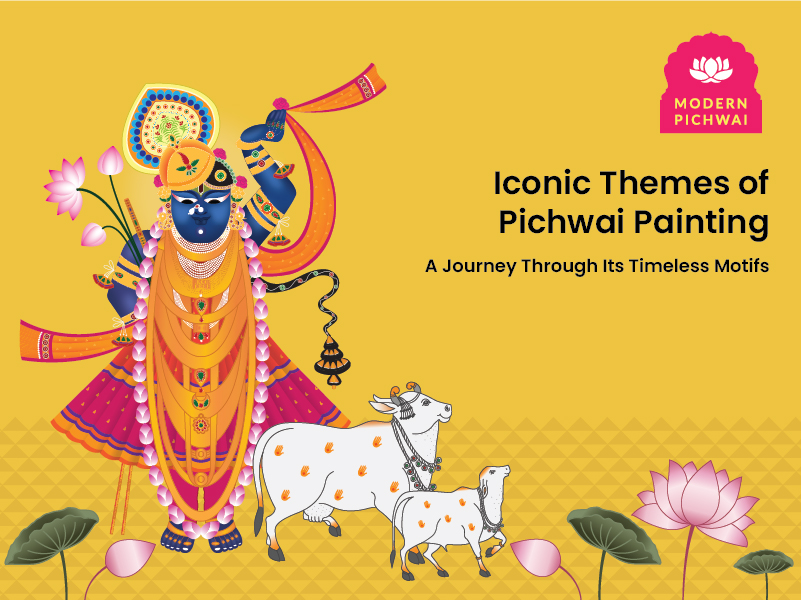
Every Pichwai painting begins with the divine presence of Shreenathji, whose image anchors the entire composition. Depicted in his signature pose of lifting the Govardhan mountain, Shreenathji represents devotion, protection, and the eternal bond between the divine and the devotee.
Artists portray him adorned with intricate ornaments, expressive eyes, and elaborate backgrounds filled with symbolic detail. Each version of Darshan reflects a different mood of worship- serene, joyful, or celebratory — allowing the viewer to connect personally with the divine form.
Lotus (Kamal Talai): Symbol of Purity and Stillness
The Kamal Talai, or lotus pond, is one of the most graceful motifs in Pichwai painting. The lotus, blooming effortlessly above calm waters, represents purity amidst worldly chaos.
Artists often fill the canvas with rows of pink and white lotuses, sometimes creating entire compositions centered on the pond itself. The soft geometry of petals and leaves brings rhythm and repetition, lending the painting its meditative quality.
In both traditional and modern interpretations, the lotus remains a quiet yet powerful reminder of spiritual awakening and peace.
Cow and Nandi Motifs: Symbols of Nurture and Strength
Gentle, serene, and sacred- the cow is a beloved subject in Pichwai painting. Depicted with jeweled necks and calm eyes, cows symbolize kindness, nourishment, and divine abundance. They’re often seen near Shreenathji or in patterned rows across the background, adding both balance and harmony to the artwork.
Alongside them, Nandi motifs- the sacred bull associated with Shiva, occasionally appear in compositions that bridge different spiritual energies, representing devotion through strength and humility.
Together, these motifs ground the spiritual narrative in themes of care and connection.
Festival Themes: The Rhythm of Devotion
The changing seasons and temple rituals inspire the festival themes of Pichwai painting. Artists capture moments of celebration, from Annakut (the mountain of food) to Janmashtami, Sharad Purnima, and Holi.
Each festival brings its own palette: soft moonlit tones for winter, lush greens for monsoon, and bright florals for summer festivities. Through these works, Pichwai becomes not just sacred art but a living calendar of devotion, color, and emotion.
Ras Leela: The Divine Dance of Joy
Few scenes express movement and bliss as beautifully as Ras Leela in Pichwai painting. This theme captures Krishna dancing with the Gopis under a starry sky- a celebration of divine love and unity.
Artists paint flowing garments, swirling patterns, and synchronized figures that seem to move within the stillness of the canvas. Ras Leela compositions are visual poetry — capturing the energy of devotion and the beauty of surrender.
Conclusion
What makes Pichwai painting truly iconic is its ability to blend the sacred with the sensory- devotion expressed through design, faith rendered in color.
Whether it’s the tranquil symmetry of the Kamal Talai, the joyous rhythm of Ras Leela, or the serene gaze of Shreenathji, each theme tells a part of an eternal story.
And as contemporary artists reimagine these motifs in modern formats, the essence of Pichwai continues to shine.